

How long does car insurance last?
Traditional car insurance will last for six to twelve months depending on what kind of policy you buy. Temporary and short-term car insurance can last for as little as a few hours or as long as three months. How long you need car insurance will ultimately decide what kind of policy you want to buy. Use our free tool below to compare policies from local car insurance companies.
Read more





Find the Lowest Car Insurance Rates Today
Quote’s drivers have found rates as low as $42/month in the last few days!




Table of Contents
Table of Contents

Insurance Claims Support & Sr. Adjuster
Kalyn grew up in an insurance family with a grandfather, aunt, and uncle leading successful careers as insurance agents. She soon found she has similar interests and followed in their footsteps. After spending about ten years working in the insurance industry as both an appraiser dispatcher and a senior property claims adjuster, she decided to combine her years of insurance experience with another...
Kalyn Johnson

Licensed Insurance Broker
Zach Fagiano has been in the insurance industry for over 10 years, specializing in property and casualty and risk management consulting. He started out specializing in small businesses and moved up to large commercial real estate risks. During that time, he acquired property & casualty, life & health, and surplus lines brokers licenses. He’s now the Senior Vice President overseeing globa...
Zach Fagiano
Updated November 2024
You have a lot to consider when you shop around for an auto insurance policy. If you’re like most drivers, the price is your top consideration when comparing one policy to another.
Since auto insurance is a purchase that doesn’t offer immediate tangible benefits, it can be hard to stomach shelling out more money each month than necessary.
The amount of coverage you’re receiving, whether your policy is comprehensive or protects against liability only, and the presence of additional perks such as uninsured motorist coverage give you additional things to consider.
One factor that often gets overlooked in the shopping process is the policy’s term length.
The most common term lengths you’ll find on the market are six months and 12 months. Both offer benefits and drawbacks, and which is a better fit depends on you and your personal situation.
Read more: Car Insurance for Three Months
Keep reading to discover how auto insurance terms work and what you need to know about them when deciding on a policy.
Compare car insurance quotes from several companies side-by-side. Just enter your zip code above to get started.
- Most auto insurance policies cover you for either a six-month or 12-month term
- Your rate is locked for the entirety of the term, even if you have an accident or moving violation
- Toward the end of your policy’s term, the insurance company reassesses you as a driver and may raise or lower your premium for the subsequent term
- Certain insurance companies offer short-term policies, such as one month, that cover you in special situations
- If your driving record worsens during your policy’s term and the company decides not to renew your policy, the company will let you know before your current term ends
What is an auto insurance term?

The term of an auto insurance policy represents how long it lasts in its current form. Suppose your policy calls for $50,000 of liability coverage at a premium of $75 per month, and the term length is 12 months.
As long as you pay your premiums on time each month (or each quarter or annum, depending on your policy’s provisions), neither the price nor the coverage level can change during the 12 months of the policy’s term.
Your policy’s term matters because your rate and coverage level are locked in for the duration of the term.
Returning to the policy example above, you could have an accident or moving violation the week after your policy goes into effect, but as long as you pay the premiums on time, the insurance company cannot raise your rates for 12 months.
Toward the end of your term, the company underwrites your policy again before providing a rate quote for a subsequent term.
Let’s say you’re involved in one at-fault accident and also receive a speeding violation during your 12-month term.
The insurance company might agree to keep you as a customer for a subsequent 12-month term but raise your monthly premium to $125.
The shorter your policy’s term, the more often it gets underwritten, and the less time you have with a guaranteed rate and coverage level.
Read More: What are 2-week car insurance rates?
Free Insurance Comparison
Compare Quotes From Top Companies and Save
Six-Month Term Advantages
Six months represents the most common policy term for auto insurance. Insurance companies often prefer six-month terms over 12-month terms because they can reassess you twice as often and make adjustments to your premiums based on what they find.
If you have an accident or moving violation, or if your credit score declines, the insurance company only has to wait six months instead of 12 to start charging you a higher rate.
But it isn’t only the insurance company that can benefit from a six-month auto insurance term. Here are a few potential advantages of a six-month policy for you, the driver:
- If your insurance company requires a lump-sum payment and doesn’t let you pay monthly, the cash outlay is less for a six-month policy.
- If your driving record or credit score improves, a six-month policy lets you petition for a lower rate sooner.
- With a six-month policy, you aren’t locked in with one company for as long and can shop around for a better deal more often.
Six-Month Term Disadvantages

Opting for a six-month term isn’t always in your best interest. Here are a few drawbacks presented by a six-month auto insurance term:
- Your premiums rise faster if you have an at-fault accident or moving violation.
- Insurance companies are more likely to require you to pay for the policy in full up front rather than monthly.
- You are guaranteed coverage for a shorter period, and the insurance company can elect to decline you for a subsequent term once your policy ends.
Compare quotes from the top car insurance companies and save
12-Month Term Advantages and Disadvantages
The advantages of a 12-month auto insurance term relate to having a longer guarantee and more security that your premiums won’t change.
Also, if you have a moving violation or accident at some point during your policy and thus know your premiums are likely to rise, you have more time to prepare and save for the increased cost.
The main disadvantage to this policy is if your personal factors improve, you won’t see a lower price from your insurer until your term is up.
Free Insurance Comparison
Compare Quotes From Top Companies and Save
Short-Term Auto Insurance Policies
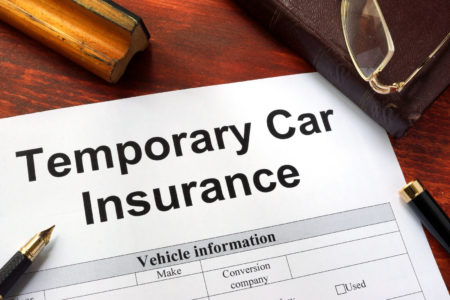
Let’s say you live in a place such as Manhattan or San Francisco where a car isn’t required but you’re planning a month-long business trip to car-centric Los Angeles.
You’ll be driving while you’re there, but it doesn’t make sense to pay for a six-month or 12-month policy when you only need auto insurance for a month.
Fortunately, many carriers offer short-term or temporary auto insurance policies for situations such as these. These policies offer coverage for a shorter period than a standard auto insurance term.
You can find short-term policies that cover everything from liability to collision to uninsured motorist protection.
The premiums and coverage amount depend on factors such as your driving record and location.
Nonrenewal of Auto Insurance Policy
Unfortunately, a rate increase isn’t the worst thing that can happen if your driving record worsens during your auto insurance policy term.
As mentioned, toward the end of your term, the insurance company reassesses your driving record. If your record hasn’t changed, then the policy you’ll be offered for the subsequent term is probably similar to your current policy as far as rate and coverage are concerned.
But if you’ve had accidents or tickets, or, in some cases, if your credit score has declined, the insurance company may place you in a higher risk class.
Because of the elevated risk, the insurance company may elect to increase your premiums, or it might decide against renewing your policy at all.
If the insurance company declines to renew your policy, it must send you something called a nonrenewal notice before your current policy’s term ends. The number of days of notice the company is required to give you varies based on your state, but in most states, it is 30 days.
Upon receipt of a nonrenewal notice, you know that your current company no longer wishes to have you as a customer, and you can get to work on finding a suitable replacement policy.
Don’t forget about term length when you’re comparing different auto insurance policies side by side.
Just like price and coverage level, how long your policy remains in force is an important factor to consider when making your decision. Whether a six-month, 12-month or short-term policy fits your needs best, it is crucial to understand how these terms differ.
Before making any final decisions on your insurance company, it is important to learn as much as you can about your local insurance providers, and the coverages they offer. Call your local insurance agent to clear up any questions that you might have. Questions to consider asking include, “What is the best coverage plan for me/my family/my situation?” “What are the minimum coverage requirements in my state and what form of coverage do you recommend?” “Do you guys offer any bundle discounts if I take out both my auto insurance and home insurance with you?” and “What is the average rate of insurance quotes you guys offer?”
Before making any big insurance decisions, use our free tool to compare insurance quotes near you. It’s simple, just plug in your zip code and we’ll do the rest!
Compare car insurance rates and find the best deal for the coverage you need.
Related Articles
-
Nov 2024

Can I Put my Car Insurance under my Dad’s Name?
-
Nov 2024
How much car insurance do I need in Florida?
-
Nov 2024
Can you cancel car insurance without penalty?
-
Nov 2024
Is it a bad idea to have health insurance cover car insurance?
-
Nov 2024
Does getting a car insurance quote lower my credit score?
-
Nov 2024
Do you need medical payments on your car insurance?




Get a FREE Quote in Minutes
Insurance rates change constantly — we help you stay ahead by making it easy to compare top options and save.