

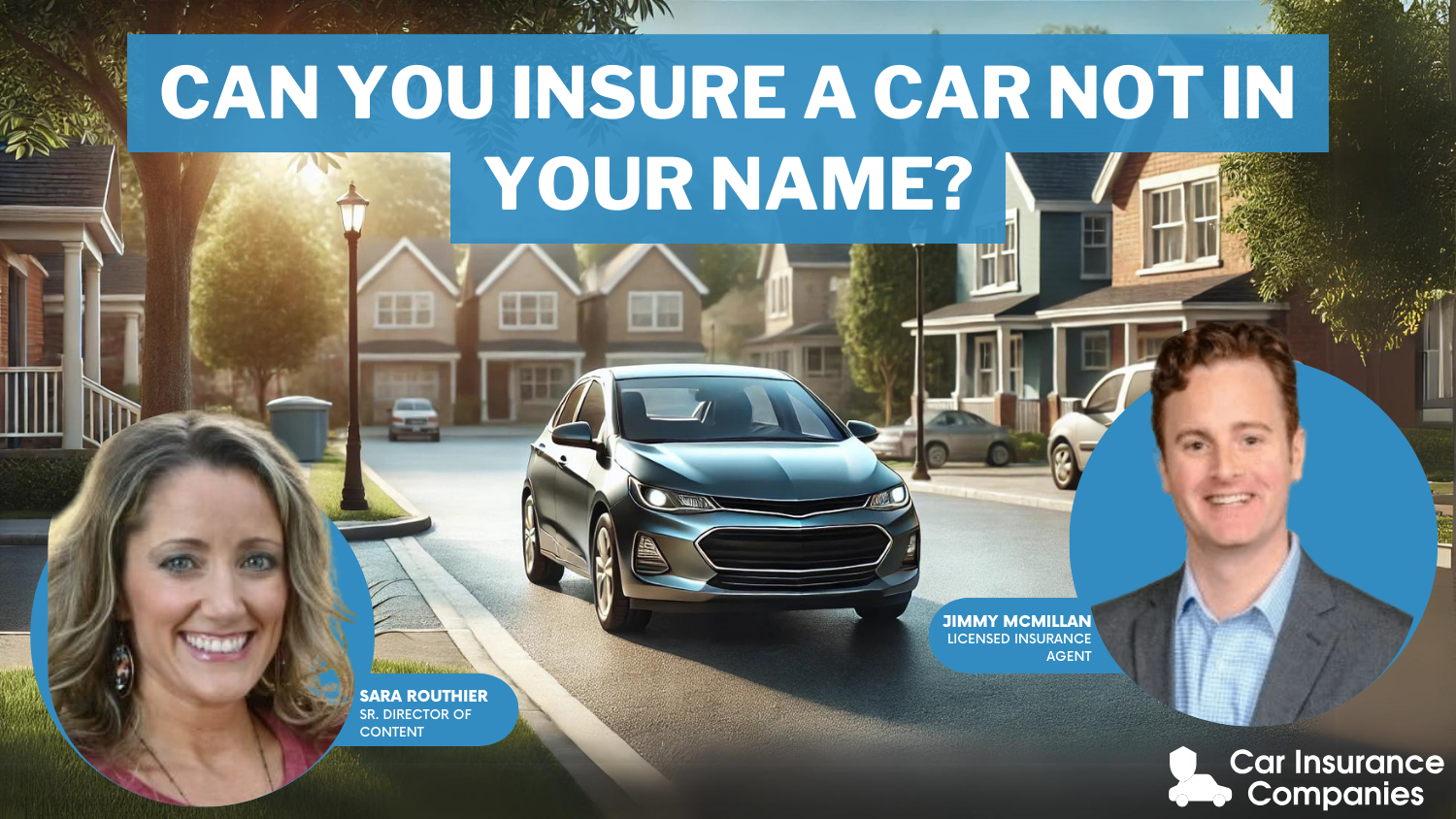
Can you insure a car not in your name?
It is difficult, but not impossible, to insure a car that is not in your own name. In most scenarios, it is better to purchase non-owner car insurance. You can do this for vehicles you borrow, rental cars, gifted cars, or company cars.
Read more Secured with SHA-256 Encryption





Find the Lowest Car Insurance Rates Today
Quote’s drivers have found rates as low as $42/month in the last few days!



Table of Contents
Table of Contents

Sr. Director of Content
Sara Routhier, Senior Director of Content, has professional experience as an educator, SEO specialist, and content marketer. She has over 10 years of experience in the insurance industry. As a researcher, data nerd, writer, and editor, she strives to curate educational, enlightening articles that provide you with the must-know facts and best-kept secrets within the overwhelming world of insurance....
Sara Routhier

Licensed Insurance Agent
Jimmy McMillan is an entrepreneur and the founder of HeartLifeInsurance.com, an independent insurance brokerage. His company specializes in insurance for people with heart problems. He knows personally how difficult it is to secure health and life insurance after a heart attack. Jimmy is a licensed insurance agent from coast to coast who has been featured on ValientCEO and the podcast Modern Li...
Jimmy McMillan
Updated November 2024
If you are trying to insure a vehicle that is not in your name, you might find it difficult, but it is not impossible. You can insure a car that you do not own under very specific circumstances, although it does not happen often. You must meet pre-determined requirements to acquire insurance coverage for a car that you do not own, and not all insurance companies will offer coverage to a person whose name is not on the car’s title.
- Typically, you can’t insure a car or vehicle that’s not in your name
- Instead, you need to purchase non-owner insurance, which doesn’t cover a specific vehicle, for a car that you are borrowing, renting, have been given as a gift, or that is provided by your employer
- If you don’t want non-owner insurance, you should co-title the car or add yourself as an additional interest
Why would a person insure a car that is not in their name?
There are several scenarios in which an individual would insure a car that is not in their name. For example, the person might not own the car, but be the only one driving it. It could belong to a family member. It could also be a work vehicle, or maybe someone loaned you the car. The only way a company will offer insurance is if you prove that you have an insurable interest in the car.
Free Insurance Comparison
Compare Quotes From Top Companies and Save
Secured with SHA-256 Encryption
What is insurable interest?
Insurable interest is the motivation a person has to get something — in this instance, a car — covered under an insurance policy. This is the first thing insurance companies like Geico and State Farm look for when crafting individual policies. If you are trying to get a car that is not in your name covered by insurance, you have to prove it’s something that, if damaged, would cause one financial hardship.
When it comes to getting a car that you do not own covered by a policy, insurable interest in the vehicle may not cut it, but there are other ways to get insurance coverage for a car not in your name, such as non-owner car insurance.
Types of Non-owner Car Insurance
Many major car insurance companies provide policies for non-owners, and there are different types of non-owner car insurance, depending on the situation. Here are the most common reasons a person would need non-owner car insurance:
Borrowing a Car From a Family Member or a Friend
If you are borrowing a car from a friend or a family member, be sure to ask the vehicle’s policyholder to speak with their insurance company to ensure that you are a covered driver. Typically, the insurance company covers “permissive use,” even if you aren’t on the list of registered users. Permissive use is when the policyholder and insurance company permit you to drive the car. The owner’s coverage extends to you when you drive the car.
Free Insurance Comparison
Compare Quotes From Top Companies and Save
Secured with SHA-256 Encryption
Renting a Vehicle
If you already have car insurance coverage for a vehicle in your name, that policy often extends to rental cars. That said, you must carry full coverage for rental car damages, theft, or vandalization to be covered. If you do not have insurance on your own vehicle, rental companies offer insurance coverage. They usually will not let someone rent a car unless they purchase coverage or show proof of coverage on another vehicle.
Read more: How does my rental car insurance work?
Company Cars
If you are required to drive a lot for work, your company may provide you with a company car. In this case, the company owns the car, and is usually listed on the insurance policy. You are not required to take out an auto policy on a company car, although they might add you to their insurance policy as a driver.
Being Gifted a Vehicle
You would also need non-owner car insurance if someone gave you a car as a gift. A minor might keep their new vehicle under a parent or guardian’s policy, but insurance companies encourage anyone over 18 years old to purchase their own policy and insure their car under their name.
Free Insurance Comparison
Compare Quotes From Top Companies and Save
Secured with SHA-256 Encryption
What does non-owner insurance cover?
Unlike regular car insurance policies, non-owner insurance policies do not cover all the bases. A non-owner policy only covers the policy holder. Additional drivers cannot be added. Since it does not cover a specific vehicle, non-owner insurance will not cover collisions, towing and labor, comprehensive coverage, rental reimbursement, or custom parts and equipment. It does cover injury to others and any property damage that might occur. Plus, you can choose add-on coverage for personal injury, medical claims, and uninsured motorist liability. (For more information, read our “What insurance do you need to be able to drive any car?“).
How much does non-owner insurance cost?
As with everything else, the cost of non-owner insurance on a car not in your name can vary. Also, since non-owners typically drive a vehicle less, the costs per year are usually lower. Several things factor into how much a non-owner insurance plan can cost.
- Where you purchase the insurance policy from
- How much coverage you want
- How often you drive the car
- Your driving history (i.e., past accidents, claims, etc.)
Yearly rates for non-owner car insurance policies range anywhere from $400 to $600. The average cost is around $475. As you can tell, this is much cheaper than purchasing a policy for a car that is in your name.
What companies offer non-owner car insurance?
Here is a list of insurance companies that offer car insurance coverage to non-owners:
| Acceptance Insurance | Farmers | Progressive |
| Allstate | Geico | State Farm |
| American Family | The General | Travelers |
| Dairyland | Liberty Mutual | USAA |
| Direct Auto | Nationwide |
What if I don’t want non-owner insurance?
If you aren’t interested in non-owner insurance, there are a few other ways to get insurance coverage for a car not in your name. You could add the owner of the vehicle to your existing insurance coverage as additional interest or gain partial ownership of the car not in your name via co-titling. There are a couple of steps if you want to go this route. First, you and the current vehicle owner must jointly apply for the new title together. Then you fill out a form, pay the fee, and take go to the DMV together.
Related Articles



Get a FREE Quote in Minutes
Insurance rates change constantly — we help you stay ahead by making it easy to compare top options and save.
Secured with SHA-256 Encryption