

Can my car be parked on the road without insurance? (2026 Coverage Rules)
Can my car be parked on the road without insurance? In most places, parking an uninsured car on the road is illegal. Even if the vehicle isn’t driven, liability laws may still apply, and you could face fines of up to $500 or even have the vehicle impounded. Keeping an uninsured car parked on the road poses serious legal risks.
Read more





Find the Lowest Car Insurance Rates Today
Quote’s drivers have found rates as low as $42/month in the last few days!




Table of Contents
Table of Contents

Expert Insurance Writer
Merriya Valleri is a skilled insurance writer with over a decade of professional writing experience. Merriya has a strong desire to make understanding insurance an easy task while providing readers with accurate and up-to-date information. Merriya has written articles focusing on health, life, and auto insurance. She enjoys working in the insurance field, and is constantly learning in order to ...
Merriya Valleri

Licensed Insurance Agent
Brad Larson has been in the insurance industry for over 16 years. He specializes in helping clients navigate the claims process, with a particular emphasis on coverage analysis. He received his bachelor’s degree from the University of Utah in Political Science. He also holds an Associate in Claims (AIC) and Associate in General Insurance (AINS) designations, as well as a Utah Property and Casual...
Brad Larson
Updated October 2024
Can my car be parked on the road without insurance? In most states, the answer is no. A registered vehicle must have at least liability insurance to park legally on public property. An uninsured vehicle parked on the road must comply with insurance laws. Insufficient insurance can result in penalties and towing risks even if not driven.
To avoid violations, vehicles classified as Planned Non-Operable (PNO) must also remain off public roads. An uninsured car parked on the road is subject to impoundment, adding to the owner’s financial burden. Getting a parking ticket for a car without insurance can lead to increased fines and registration issues.
If you need to understand your options better, enter your ZIP code above to explore solutions from various car insurance companies that fit your needs. Compliance with insurance regulations ensures legal parking and protects your financial interests.
- Insurance is required to park a registered vehicle on public roads
- Uninsured cars parked on the road risk towing and impoundment
- Planned Non-Operable (PNO) vehicles cannot be parked on public roads at all
The Purpose of Vehicle Registration
The state has a Department of Motor Vehicles to provide identification, motor vehicle licensing, and driver licensing services to residents of the state. They monitor auto registrations, licensing, and many other things when you’re talking about driving on a public street.
The agency plays a major role in helping educate the public and enforce state legislation. All cars operated on state highways and local roads must be registered through the DMV.
Since you have to report your vehicle’s status as soon as you take ownership, you need to learn what the purpose of a vehicle registration is.
Vehicle Insurance and Parking Rules
| Category | Description |
|---|---|
| Insurance Requirement | All vehicles must have at least minimum liability coverage as required by state law. |
| Proof of Insurance | Drivers must carry proof of insurance and present it when requested by law enforcement. |
| Parking in Designated Areas | Vehicles must be parked in designated parking spots; failure to comply may result in fines or towing. |
| Handicap Parking | Only vehicles with a valid handicap placard or license plate may park in handicap spots. |
| No Parking Zones | Parking is prohibited in fire lanes, bus stops, and other restricted areas as marked by signs. |
| Metered Parking | Payment is required during posted hours for metered parking spots. Non-payment may result in a fine. |
| Private Parking | Unauthorized vehicles parked on private property may be towed at the owner’s expense. |
| Residential Parking Permits | Some residential areas require permits for parking; vehicles without permits may be ticketed or towed. |
This registration identifies a car, the car’s legal owner, where the vehicle is stored, and how much the owner must pay in taxes to drive the vehicle on public roadways. You can’t drive, tow, or park a car on public roads without valid license plates.
Read More: Can I get car insurance without registration?
Free Insurance Comparison
Compare Quotes From Top Companies and Save
Insurance Requirements for Every Vehicle
You need to have active registration placards to drive your vehicle and park it on public roads, but does that mean that you need insurance? In most states, auto insurance is mandatory. When you’re required to purchase motor vehicle liability insurance, having a registration means that you have to have insurance.
While auto insurance is typically required, there are states where you don’t have to maintain insurance.
In Virginia and New Hampshire, you can pay an uninsured motorist fee, and you don’t have to pay premiums each and every month. Since there’s an exception to the general rule, you don’t always have to have insurance just to own a registered vehicle. If you get in an accident, you will not have any insurance coverage, leaving you vulnerable to lawsuits, injuries, etc.
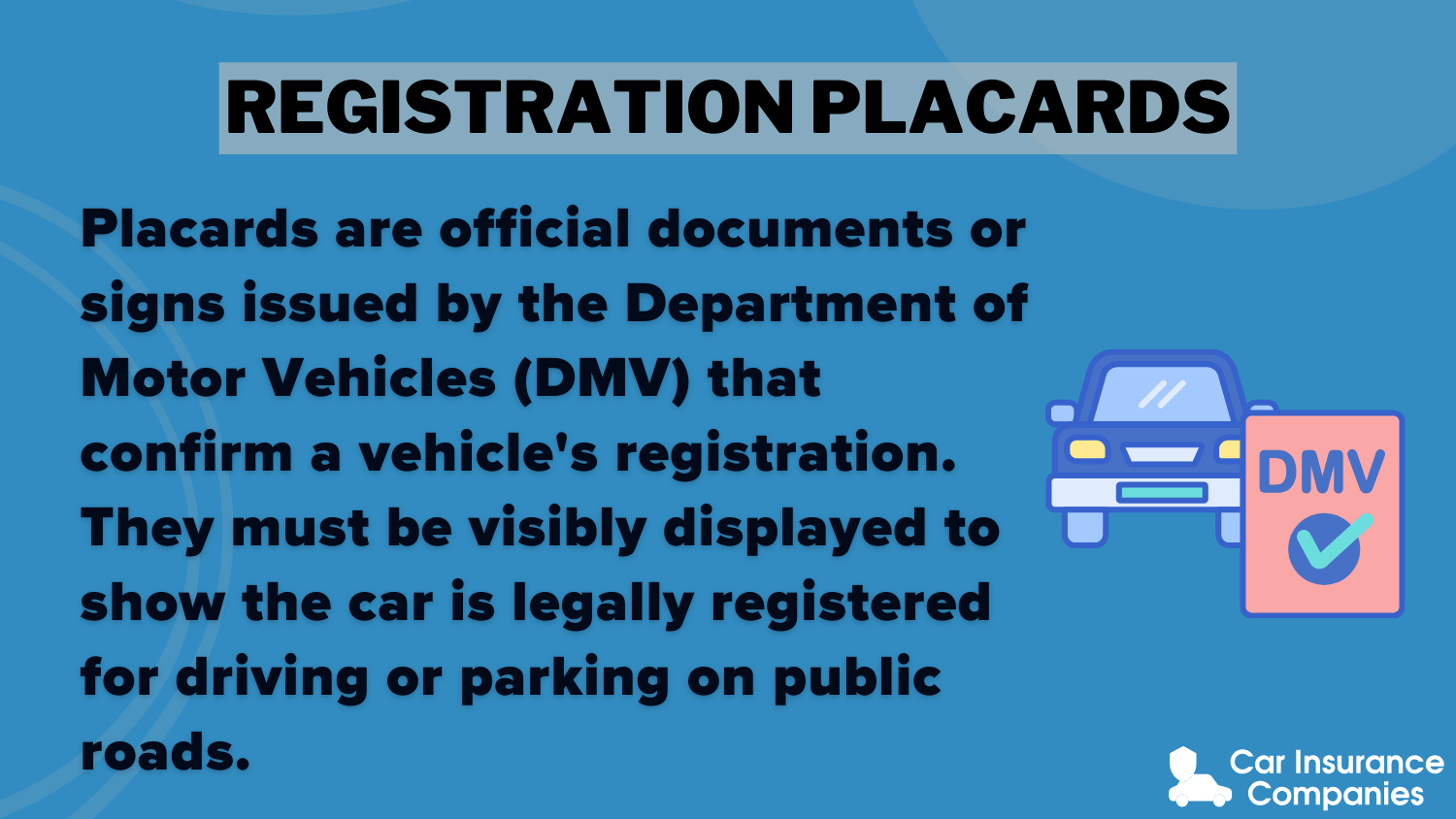
So, most car owners would only want to use this option if they were storing their car on private property. Unfortunately, many parked cars on the road can be hit and damaged. They can also be towed if the city is doing work on that road.
Read more:
Alternatives to Insurance Requirements
If you live in a state with financial responsibility laws, there are alternative ways to get around the insurance requirement. Of course, with any of these alternatives, you would need to cover your own medical bills and property damage repair bills after an accident. They’re just meant to prove you can pay for a certain amount of liability if you cause an accident.
You can deposit cash with the treasurer, apply for a self-insurance certificate, or apply for a surety bond. Like standard insurance, you can be sued if your liability coverage is not enough. More importantly, you’d have to add more money or repurchase a bond if you cause an accident depleting the funds.
Parking an uninsured car on public roads not only results in hefty fines but also increases the risk of costly towing and impoundment. It's crucial for vehicle owners to understand that insurance is a legal requirement, even for non-operable cars.
Tracey L. Wells Licensed Insurance Agent & Agency Owner
If you comply with an alternative filing method and the DMV accepts the proof, you don’t technically need insurance to maintain your registration or park your car on the road. With this being said, alternative methods generally cost more than buying insurance in the first place.
Imagine depositing the full amount of your liability coverage into a fund all at once. This could be $35,000 or more at once when cheap insurance might only cost you $100 a month or less. This is more common for medium—to large companies looking to self-insure their own vehicle fleets.
Read More: Best Car Insurance for Rarely Driven Cars
Parking a Planned Non-Operable Vehicle on the Road
If you’re not driving your vehicle regularly, it may make more sense for you to report your vehicle as Planned Non-Operable. Filing the car as PNO means that you don’t plan on driving, storing, parking, or towing the vehicle on the road or a highway for the entire registration period.
If your vehicle currently has a PNO filing, you can only keep it parked in your driveway or on private property elsewhere. You don’t need insurance on the car to do this, but you can’t park the car on the road with or without insurance because it violates the conditions to pay the small PNO fee.
If you do an uninsured car parked on the street, it can be towed and impounded. (For more information, read our “How do I get my impounded car back?“).
Free Insurance Comparison
Compare Quotes From Top Companies and Save
Legality of Parking a Car on the Road Without Insurance
You don’t need insurance on the car to do this, but you can’t park the car on the road with or without insurance because doing so violates the conditions for paying the small PNO fee. If you do park the car on the road, it can be towed and impounded.
Read more: Can I tow my car with no insurance?
If you don’t have insurance and need to move your car, it’s time to price how much liability insurance will cost. Use an online quote comparison tool, and you can find affordable insurance and apply for it all in a matter of minutes. Enter your ZIP code below to compare car insurance rates from multiple companies simultaneously.
Frequently Asked Questions
Can a car be parked on the road without insurance?
So, can a car be parked on the street without insurance? No, parking a car on the road without insurance is usually illegal. Even if the car is stationary, liability laws apply, and you could face fines or impoundments. Check out our article “How does a car’s expired registration and safety inspection affect car insurance?” for more details on parking regulations and insurance requirements.
Can I have an uninsured car on my driveway?
Can I park my car on my drive without insurance? Yes, an uninsured car on the driveway is typically allowed since it’s on private property, but it cannot be driven legally without insurance.
Can I park a car without insurance?
Can you have a car parked without insurance? Yes, but only on private property. An uninsured car on private property is allowed, while a car with no insurance parked on the road is subject to fines, towing, or impoundment.
Do I need insurance to leave my car parked on the street?
Do you need insurance to park on the road? Yes, most areas require insurance for a car parked on the road without insurance to avoid fines or impoundment.
Does a car need to be insured to park on the road?
Yes, a car with no insurance parked on road is usually illegal. You risk fines and towing for leaving it uninsured.
Can your car get towed for no insurance in Florida?
Yes, in Florida, a car parked without insurance can be towed, especially if left on public roads without coverage.
Read more: Florida Car Insurance
Is car insurance mandatory in the USA?
Yes, nearly all states require car insurance, though specific coverage requirements vary by location.
Is it illegal to not have car insurance in the US?
Is it illegal to have a car parked without insurance? Yes, driving without insurance is illegal in every state except New Hampshire, which has specific financial responsibility rules.
What happens if you don’t have insurance on your car in Florida?
In Florida, driving or having a car with no insurance parked on the road can result in fines, license suspension, and vehicle impoundment. Check out the top 10 Florida car insurance companies for insights on finding affordable coverage and avoiding penalties.
Can your car be impounded for no insurance in Texas?
Yes, Texas law permits authorities to impound a car parked without insurance on public roads, but an uninsured car parked on a driveway is typically allowed.
What happens to my no-claims if I have an accident?
What happens if a driver does not admit fault?
What is 3rd party insurance?
Can a foreigner get car insurance in the USA?
How expensive is car insurance in America?
Can you go to jail for no insurance in Texas?
Related Articles

Get a FREE Quote in Minutes
Insurance rates change constantly — we help you stay ahead by making it easy to compare top options and save.